High Demand for Healthcare Professionals
Canada continues to prioritize healthcare professionals through targeted Express Entry draws. In 2026, these category-based selections offer a direct pathway to permanent residence for candidates in 35 eligible occupations, often with more accessible CRS scores than general draws.
EXPRESS ENTRY HEALTHCARE — 2026 GUIDE

For international healthcare professionals—including physicians, nurses, personal support workers, and allied health specialists—Canada’s immigration landscape in 2026 presents a clear and accelerated pathway. The federal government, through Immigration, Refugees and Citizenship Canada (IRCC), has firmly established healthcare as a critical sector, utilizing category-based Express Entry draws to specifically target and invite skilled workers who can fill urgent labour gaps across the country. This guide provides a comprehensive, data-driven overview of the Express Entry Healthcare Category, detailing the precise eligibility criteria, the crucial role of provincial licensing, strategies for maximizing your CRS score, and how to leverage Provincial Nominee Programs (PNPs) to strengthen your application for permanent residence.
An Introduction to Canada’s Express Entry Healthcare Category in 2026
The introduction of category-based selection draws in 2023 marked a significant shift in how Canada manages its economic immigration intake. Instead of relying solely on a high Comprehensive Ranking System (CRS) score, IRCC can now issue Invitations to Apply (ITAs) to candidates with specific work experience or attributes that align with national economic priorities. Healthcare has consistently been a top priority category, reflecting Canada’s demographic shifts, an aging population, and the ongoing need to reinforce its world-class healthcare system.
What Are Category-Based Draws?
Category-based draws are a targeted selection mechanism within the Express Entry system. They allow IRCC to focus on candidates who possess in-demand skills, such as specific work experience or strong French language abilities. For a candidate to be eligible for a category-based draw, they must first have an active profile in one of the three main Express Entry programs: the Federal Skilled Worker Program (FSWP), the Canadian Experience Class (CEC), or the Federal Skilled Trades Program (FSTP). When a category-specific draw occurs, the system invites the highest-ranking candidates within that category, often resulting in a lower minimum CRS score requirement compared to general, all-program draws.
Why Healthcare Is a Critical Priority for Canadian Immigration
Canada’s demand for healthcare workers is not a temporary trend; it is a long-term structural need. Several factors contribute to this sustained demand. Firstly, Canada’s population is aging, increasing the need for geriatric care, long-term care facilities, and specialized medical services. Secondly, many healthcare professionals from the baby boomer generation are retiring, creating significant vacancies that cannot be filled by domestic graduates alone. Finally, Canada is committed to expanding access to healthcare, particularly in rural and remote communities, which requires a steady influx of new talent. Immigration is the primary strategic tool the government is using to address these challenges head-on.
The 2026 Outlook for Healthcare Immigration
The outlook for 2026 remains exceptionally positive for healthcare professionals. The federal government’s Immigration Levels Plan continues to set ambitious targets, with a significant portion of new permanent residents expected to arrive through economic streams like Express Entry. Provincial governments are also aggressively recruiting healthcare talent through their Provincial Nominee Programs (PNPs), often creating dedicated streams and lowering barriers for physicians, nurses, and other specialists. This dual federal-provincial focus creates multiple, often overlapping, opportunities for qualified candidates to secure permanent residence.
Understanding the Core Express Entry System for Healthcare Professionals
Before diving into the specifics of the healthcare category, it is essential to understand the foundational Express Entry system. Express Entry is not an immigration program itself but an online application management system for three key federal economic immigration programs. It operates on a points-based system, ranking candidates against one another in a pool.
The Three Federal High-Skilled Programs
To enter the Express Entry pool, you must first be eligible under one of these programs:
- Federal Skilled Worker Program (FSWP): This is the most common pathway for applicants outside Canada. It assesses candidates based on factors like age, education, work experience, language skills, and adaptability. You must score at least 67 out of 100 points on the FSWP selection grid. Your work experience must be in a TEER 0, 1, 2, or 3 occupation.
- Canadian Experience Class (CEC): This program is for individuals who already have at least one year of skilled work experience in Canada within the last three years. This is a popular route for healthcare professionals who initially come to Canada on a work permit.
- Federal Skilled Trades Program (FSTP): This program is for skilled trades workers and is less relevant for most healthcare occupations, which fall under professional or technical categories.
Most international healthcare professionals will qualify for the Express Entry pool through the Federal Skilled Worker Program.
Creating Your Express Entry Profile: The First Step
Once you confirm your eligibility for one of the programs, the next step is to create a free online Express Entry profile. In this profile, you will provide detailed information about your work experience, education (including an Educational Credential Assessment), language test results, age, and other personal details. Based on this information, the system will automatically calculate your Comprehensive Ranking System (CRS) score and place you in the pool of candidates.
The Comprehensive Ranking System (CRS) Explained
The CRS is the scoring mechanism that determines your rank in the Express Entry pool. It awards points for core human capital factors, spousal factors, skills transferability, and additional factors like a provincial nomination or a qualifying job offer. The total possible score is 1,200 points. While category-based draws for healthcare may have lower CRS cut-offs, a higher score always increases your chances of receiving an Invitation to Apply (ITA).
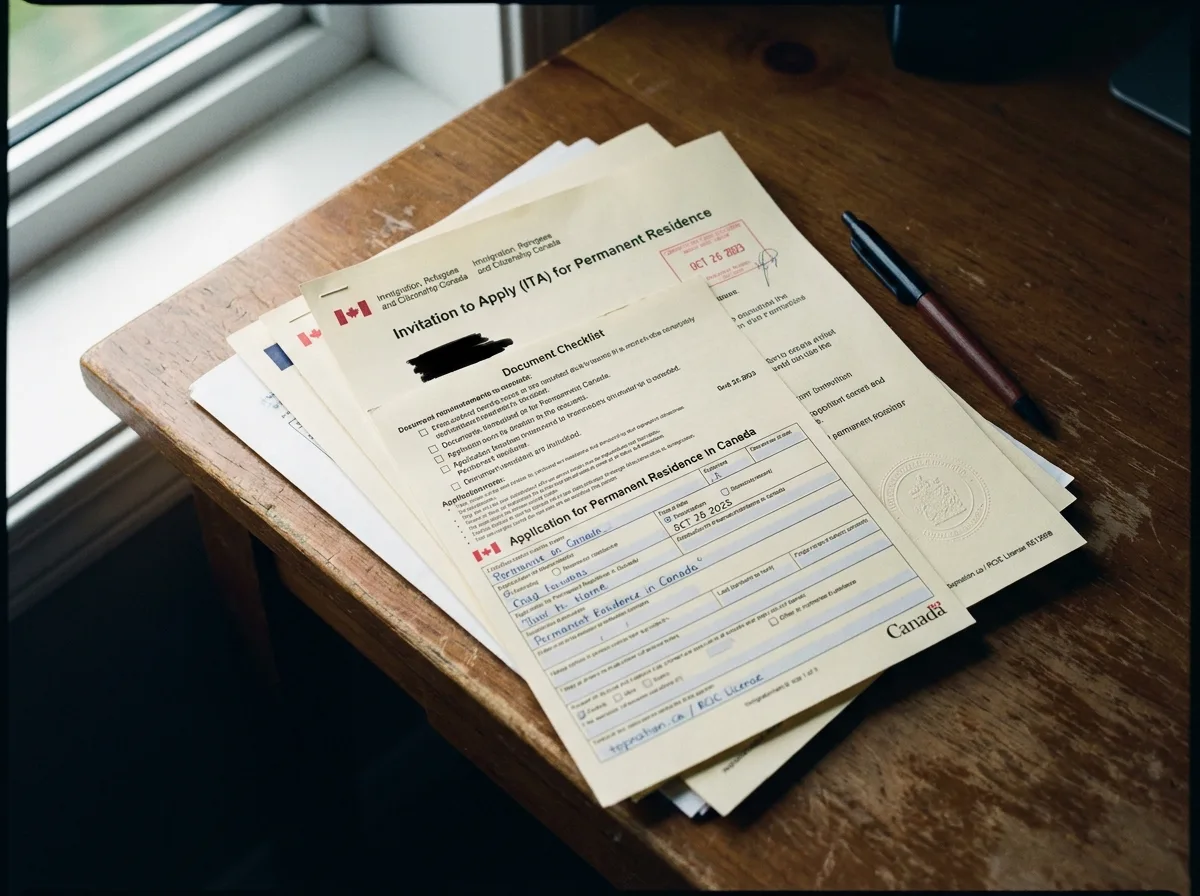
Eligible Occupations for the Healthcare Category Draws (NOC Codes)
A fundamental requirement for the healthcare category is having at least six months of continuous, full-time (or an equivalent amount of part-time) work experience within the last three years in one of the designated National Occupational Classification (NOC) codes. This experience can be from within Canada or abroad. IRCC has identified 35 specific healthcare occupations that are eligible for these targeted draws.
Breakdown of the 35 Eligible NOCs
The list of eligible occupations is extensive and covers a wide range of roles within the healthcare sector, from surgeons and general practitioners to therapists, technicians, and support staff. Understanding exactly where your profession fits is the first step in confirming your eligibility. These roles are essential for the functioning of hospitals, clinics, long-term care homes, and community health services across Canada.
Focus on Nursing Occupations
Nurses are consistently one of the most in-demand professions in Canada. The healthcare category targets several key nursing roles:
- NOC 31301 – Registered nurses and registered psychiatric nurses: This is a broad category for frontline nursing staff in various healthcare settings.
- NOC 31302 – Nurse practitioners: Advanced practice nurses who can diagnose illnesses, order tests, and prescribe medications.
- NOC 32101 – Licensed practical nurses (LPNs): Provide a wide range of nursing care under the direction of a registered nurse or physician.
- NOC 31300 – Nursing co-ordinators and supervisors: Managerial roles for experienced nurses leading teams.
Focus on Physician Occupations
Physicians, both general practitioners and specialists, are critical to Canada’s healthcare system. The eligible NOCs include:
- NOC 31102 – General practitioners and family physicians: The backbone of primary care in Canada.
- NOC 31100 – Specialists in clinical and laboratory medicine: Includes roles like cardiologists, oncologists, and pathologists.
- NOC 31101 – Specialists in surgery: Covers all surgical specializations.
Focus on Allied Health and Support Occupations
Beyond doctors and nurses, the system recognizes the vital contributions of allied health professionals and support workers. Key eligible roles include:
- NOC 31201 – Chiropractors
- NOC 31202 – Physiotherapists
- NOC 31203 – Occupational therapists
- NOC 32103 – Respiratory therapists, clinical perfusionists and cardiopulmonary technologists
- NOC 33102 – Nurse aides, orderlies and patient service associates (PSWs): These roles are crucial for patient support in hospitals and long-term care.
| NOC Code | Occupation Title | Brief Description |
|---|---|---|
| 31301 | Registered Nurses (RNs) | Provide direct nursing care to patients, administer treatments, and advise on health-related issues. |
| 31102 | General Practitioners & Family Physicians | Diagnose and treat diseases, physiological or psychiatric disorders and act as primary care consultants. |
| 31202 | Physiotherapists | Assess patients and plan and carry out individually designed treatment programs to maintain, improve or restore physical functioning. |
| 33102 | Nurse Aides, Orderlies and Patient Service Associates | Assist nurses, hospital staff and physicians in the basic care of patients in hospitals, nursing homes, and other healthcare facilities. |
Provincial Licensing and Credential Recognition: The Critical Hurdle
For most healthcare professionals, having eligible work experience is only one part of the equation. The most significant and time-consuming step is often securing the necessary license or certification to practice in a Canadian province or territory. Healthcare is a regulated profession in Canada, and you cannot work in these roles without being registered with the appropriate provincial regulatory body. This process must often be started long before you even submit your Express Entry profile.
Why Licensing is Non-Negotiable
Provincial regulatory bodies are responsible for protecting the public by ensuring that all healthcare professionals meet a high standard of education, skill, and ethical conduct. They set the requirements for entry to practice, assess the qualifications of internationally educated professionals, and issue licenses. Attempting to bypass this step is not possible. For your Express Entry application, proof that you are licensed or eligible for licensure can be a major advantage, and for many PNP streams, it is a mandatory requirement.
The Role of Regulatory Bodies
Each province has its own set of regulatory bodies. For example, physicians must register with the College of Physicians and Surgeons of the specific province where they intend to practice (e.g., the College of Physicians & Surgeons of Alberta or the College of Physicians and Surgeons of Ontario). Similarly, nurses must register with their provincial college, such as the British Columbia College of Nurses and Midwives (BCCNM) or the College of Nurses of Ontario (CNO).
The Medical Council of Canada (MCC) for Physicians
For International Medical Graduates (IMGs), the journey typically begins with the Medical Council of Canada (MCC). You will need to have your medical credentials source-verified through physiciansapply.ca and typically must pass the MCC Qualifying Examination (MCCQE) Part I. Passing this exam is a prerequisite for applying to most provincial regulatory bodies for licensure.
The National Nursing Assessment Service (NNAS) for Nurses
Internationally Educated Nurses (IENs) usually start their process with the National Nursing Assessment Service (NNAS). NNAS provides a standardized initial assessment of your credentials and compares them to Canadian nursing standards. After receiving your NNAS advisory report, you can then apply to the nursing regulatory body in your chosen province, which may require further assessments or bridging programs.
Credential Assessment (ECA) vs. Professional Licensing
It is crucial to distinguish between an Educational Credential Assessment (ECA) for immigration purposes and the credential evaluation required for professional licensing. An ECA from an organization like WES or ICAS is mandatory for your Express Entry profile to claim points for your foreign education. However, this ECA is not sufficient for professional licensing. The provincial regulatory bodies conduct their own, much more detailed and rigorous assessments of your education and training to determine if you meet their specific practice standards.
Deep Dive: Navigating the Licensing Process by Profession
The path to licensure varies significantly depending on your profession and the province you choose. It is a complex process that requires careful planning, significant documentation, and patience. Starting this process early is arguably the most important strategic decision you can make in your immigration journey.
Licensing Pathway for International Medical Graduates (IMGs)
For IMGs, the path is multi-staged. After source verification and passing the MCCQE Part I, you must typically complete a postgraduate residency training program in Canada. To get into a residency program, you must apply through the Canadian Resident Matching Service (CaRMS). Some provinces have specific programs or practice-ready assessments designed to fast-track experienced IMGs into practice, particularly in underserved areas. This is a long and competitive process, and seeking expert guidance is highly recommended. For personalized advice, you should contact a licensed RCIC.
Licensing Pathway for Internationally Educated Nurses (IENs)
After the NNAS assessment, the provincial nursing college will determine your next steps. This could range from being declared eligible to write the national nursing exam (the NCLEX-RN for registered nurses) directly, to being required to complete a competency assessment, to being mandated to enroll in a bridging program to fill any identified gaps in your education or experience. The process can take anywhere from 12 to 24 months, or even longer, depending on the province and individual circumstances.
Licensing for Pharmacists, Dentists, and Physiotherapists
Other regulated professions have similarly structured pathways. Pharmacists must go through the Pharmacy Examining Board of Canada (PEBC). Dentists must have their credentials assessed by the National Dental Examining Board of Canada (NDEB). Physiotherapists must work with the Canadian Alliance of Physiotherapy Regulators (CAPR). Each of these pathways involves examinations, credential assessments, and specific provincial registration requirements.
Timelines and Costs Associated with Licensing
Candidates must be prepared for the significant time and financial investment required for licensing. Application fees, document verification, examination costs, and potential travel for assessments can add up to several thousand dollars. The timeline can also be lengthy, often taking over a year before you are fully licensed. It is critical to factor these costs and timelines into your overall immigration plan.
Comprehensive Ranking System (CRS) Scores in Healthcare Draws
While licensing is a prerequisite, your CRS score remains a vital component of your Express Entry journey. The primary benefit of category-based draws is that the minimum CRS score required for an ITA is often significantly lower than in general draws.
How Category-Based Draws Affect CRS Score Thresholds
In a general draw, IRCC invites the top-ranking candidates regardless of their occupation. This often leads to very high CRS cut-offs (frequently in the 500s). In a healthcare-specific draw, IRCC invites the top-ranking candidates *only from the pool of eligible healthcare professionals*. Because this is a smaller, more targeted pool, the score of the lowest-ranked candidate invited (the cut-off score) is naturally lower. We have seen healthcare draws with CRS scores in the mid-to-low 400s, and sometimes even lower, making permanent residence accessible to a much broader range of candidates.
Analyzing Recent Healthcare Draw CRS Scores
Throughout 2024 and 2025, healthcare draws consistently featured lower CRS scores than their all-program counterparts. For example, a healthcare draw might have a CRS cut-off of 431, while a general draw in the same month might be 525. This difference of nearly 100 points is life-changing for many applicants. It means that factors like being slightly older or having a master’s degree instead of a PhD do not necessarily disqualify you from receiving an invitation.
Maximizing Your CRS Score as a Healthcare Professional
Even with lower cut-offs, aiming for the highest possible CRS score is always the best strategy. Key ways to maximize your points include:
- Language Skills: Achieving the highest possible scores on your IELTS or CELPIP English test (and TEF or TCF for French) is the single most effective way to boost your score. A CLB 9 or higher yields substantial points.
- Education: Ensure you claim points for all post-secondary credentials. If you have two or more degrees, you receive additional points.
- Work Experience: Accurately document all your skilled work experience. Three or more years of experience maximizes your points in this category.
- Spousal Factors: If you are applying with a spouse or partner, their language skills and education can also contribute to your total CRS score. For some, applying as a single applicant may yield a higher score; this is a strategic decision that requires careful calculation. If your spouse is accompanying you, they may be eligible for an open work permit after you receive your PR, and you may want to explore options for spousal sponsorship down the line.
| Factor | Scenario A: Registered Nurse (32) | Scenario B: Family Physician (40) |
|---|---|---|
| Age | 99 points | 55 points |
| Education | 120 points (Bachelor’s Degree) | 150 points (Professional Degree) |
| Language (English) | 128 points (CLB 9) | 110 points (CLB 8) |
| Foreign Work Experience | 50 points (3+ years) | 50 points (3+ years) |
| Skills Transferability | 50 points | 50 points |
| Estimated Total CRS | 447 points | 415 points |

The Strategic Role of Provincial Nominee Programs (PNPs)
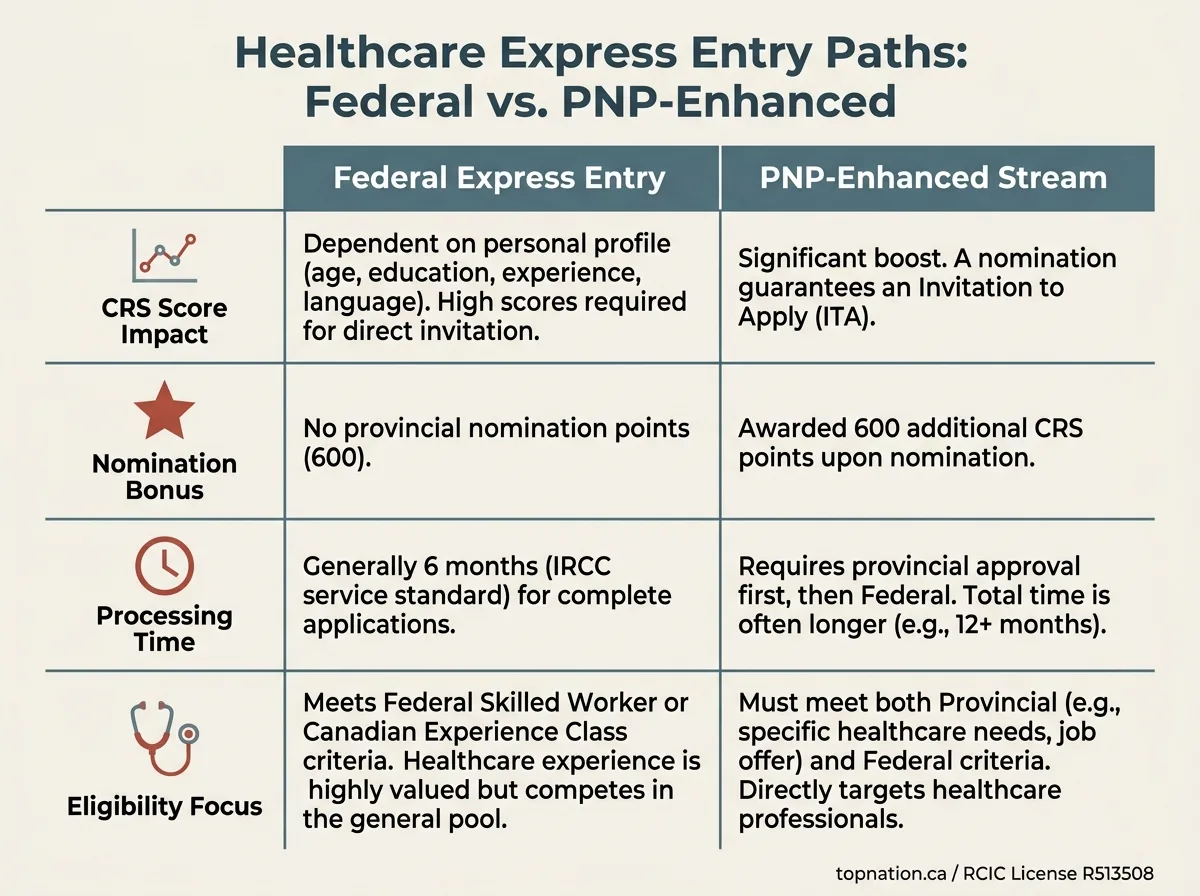
While the federal healthcare draws are an excellent pathway, they are not the only option. Provincial Nominee Programs (PNPs) are a powerful alternative or complementary strategy. Securing a provincial nomination automatically adds 600 points to your CRS score, virtually guaranteeing you will receive an ITA in the next draw.
How PNPs Align with Healthcare Draws
Provinces use their PNPs to address their specific local labour market needs. Since healthcare shortages are a nationwide issue, nearly every province has a PNP stream dedicated to or that prioritizes healthcare workers. These programs often have their own unique eligibility criteria, which may include a job offer from a provincial employer, a connection to the province, or experience in a specific high-demand occupation.
Ontario’s Human Capital Priorities Stream
The Ontario Immigrant Nominee Program (OINP) frequently holds targeted draws for healthcare professionals through its Human Capital Priorities stream. The province searches the federal Express Entry pool and issues Notifications of Interest (NOIs) to candidates with experience in specific healthcare NOCs, inviting them to apply for a provincial nomination.
British Columbia PNP’s Healthcare Professional Category
British Columbia has a dedicated Healthcare Professional category under its Skills Immigration stream. This stream is for physicians, nurses, and allied health professionals with a job offer from a public health authority in B.C. It provides an expedited pathway for those who have secured employment in the province.
Alberta Advantage Immigration Program (AAIP) – Designated Healthcare Pathway
The Alberta Advantage Immigration Program (AAIP) has a specific Designated Healthcare Pathway for healthcare professionals who have a job offer from an Alberta employer in an eligible healthcare occupation. This pathway works in partnership with Alberta Health Services (AHS) and other provincial healthcare employers to streamline the nomination process. If you are considering moving to Alberta, an Edmonton immigration consultant can provide localized expertise.
Nova Scotia’s Labour Market Priorities for Nurses
Nova Scotia is another province that actively recruits nurses. Through its Labour Market Priorities stream, the Nova Scotia Nominee Program (NSNP) periodically holds draws specifically for nurses in the Express Entry pool, inviting them to apply for nomination without requiring a job offer in all cases.
| Province | Key PNP Stream | Job Offer Required? |
|---|---|---|
| Alberta | Designated Healthcare Pathway | Yes, from an Alberta employer. |
| British Columbia | Healthcare Professional Category | Yes, from a public health authority. |
| Ontario | Human Capital Priorities (Healthcare Draws) | No, but having one increases points. |
| Saskatchewan | International Health Worker EOI Pool | Yes, a full-time, permanent offer. |
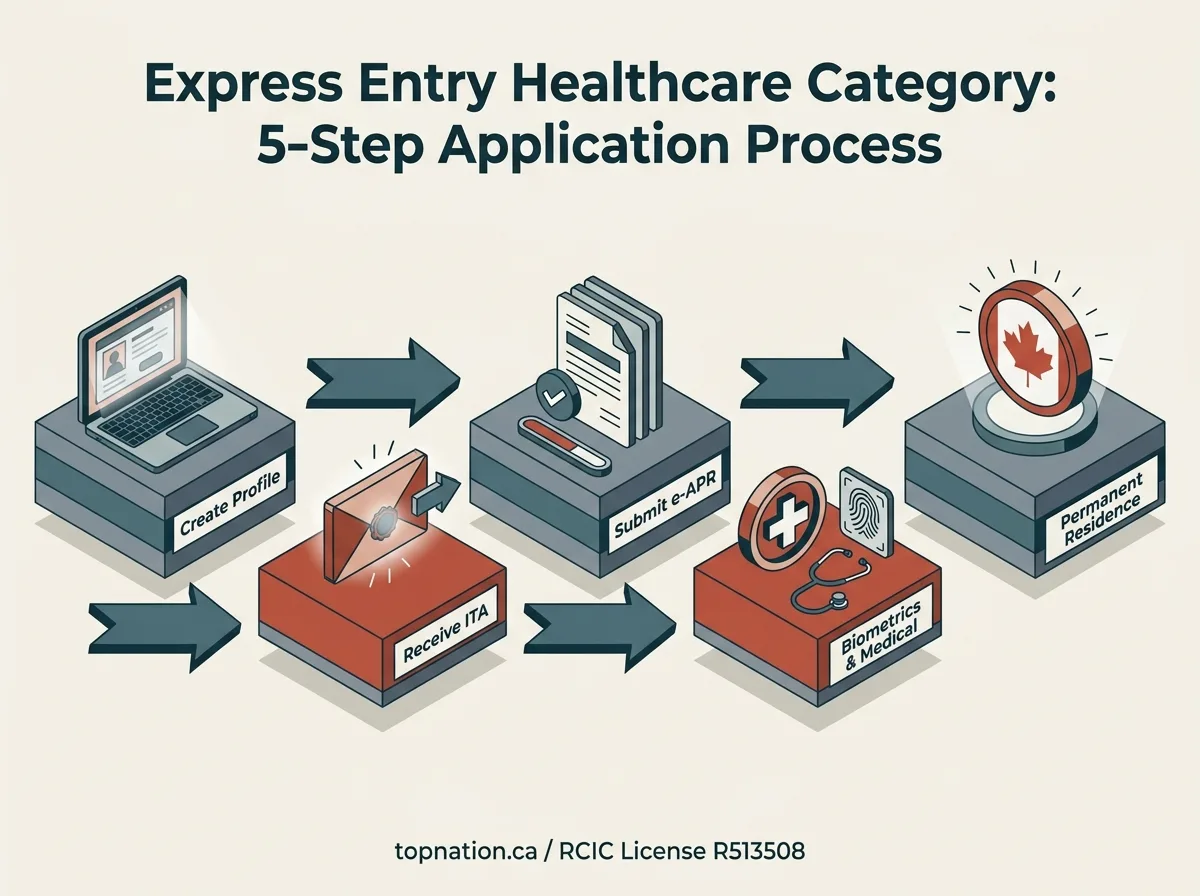
Step-by-Step Application Guide for the Healthcare Category
Navigating the Express Entry system as a healthcare professional requires a methodical approach. Following these steps in the correct order can save you time and prevent costly mistakes.
Step 1: Confirm Your NOC and Eligibility
First, carefully review the list of 35 eligible healthcare NOC codes. Ensure that the primary duties listed in the official NOC description match your own job responsibilities. You must have at least six months of continuous experience in this single NOC within the past three years to be eligible for the category-based draw. You must also meet the minimum requirements of the Federal Skilled Worker Program (or CEC/FSTP).
Step 2: Complete Your Educational Credential Assessment (ECA)
While you begin the licensing process, you should also apply for your ECA. This is a mandatory document for all FSWP candidates. Select a designated organization like World Education Services (WES) and submit your educational transcripts for assessment. This process can take several months, so start early.
Step 3: Take Your Language Tests (IELTS/CELPIP)
Book and prepare for an approved English (IELTS General Training or CELPIP-General) or French (TEF Canada or TCF Canada) language test. Your results are valid for two years. Aim for the highest score possible, as language proficiency is a major driver of your CRS score.
Step 4: Begin the Provincial Licensing Process
As discussed, this is the most critical and often longest step. Identify the correct regulatory body for your profession in your target province(s) and start the application process. This involves credential verification, exams, and potentially competency assessments. Document every step of this journey meticulously.
Step 5: Create Your Express Entry Profile
Once you have your ECA report and language test results, you can create your online Express Entry profile. Enter all information accurately. The system will calculate your CRS score and place you in the pool. If you are eligible for the healthcare category, you will be automatically considered in those draws.
Step 6: Receiving an Invitation to Apply (ITA)
If your CRS score is above the cut-off in a draw for which you are eligible (either a general draw or a healthcare-specific draw), you will receive an ITA for permanent residence. This is a formal invitation from IRCC to submit a full application.
Step 7: Submitting Your Post-ITA Application
After receiving an ITA, you have 60 days to submit a complete and accurate application for permanent residence. This includes providing extensive documentation to support all the claims made in your Express Entry profile, such as reference letters, police certificates, medical exams, and proof of funds. This is a deadline-driven stage where professional guidance can be invaluable to ensure compliance and avoid refusal.
Frequently Asked Questions for Healthcare Applicants
Navigating this complex pathway often raises many questions. Here are answers to some of the most common queries from healthcare professionals considering immigration to Canada.
Do I need a Canadian job offer for the healthcare draw?
No, a Canadian job offer is not a mandatory requirement to be eligible for the federal Express Entry healthcare category draws. The primary eligibility criterion is having at least six months of relevant work experience in one of the 35 targeted NOCs. However, having a valid Canadian job offer can significantly increase your CRS score. Furthermore, many of the Provincial Nominee Program (PNP) streams for healthcare workers do require a job offer from an employer in that province.
How much work experience is required?
For the category-based draw itself, you need a minimum of six months of continuous, full-time (or equivalent part-time) paid work experience in a single eligible healthcare NOC within the last three years. This can be from inside or outside Canada. However, to meet the underlying requirements of the Federal Skilled Worker Program, you will need at least one year of continuous, full-time skilled work experience in total.
Can I include my spouse or partner in my application?
Yes, you can include your spouse or common-law partner in your Express Entry application. They will be able to receive permanent residence at the same time as you. Their education level and language proficiency can also contribute points to your overall CRS score. It is important to assess whether including them helps or hinders your score and to make a strategic decision. You will need to provide supporting documents for them as well, such as identity documents, police certificates, and a medical exam.
What are the proof of funds requirements?
Most candidates applying under the Federal Skilled Worker Program must show they have enough money to support themselves and their family upon arrival in Canada. This is known as settlement funds. The required amount depends on the size of your family. This requirement is waived for candidates who are authorized to work in Canada and have a valid job offer, as well as those applying under the Canadian Experience Class. The funds must be readily available, unencumbered by debts, and in your name or the name of your accompanying spouse.
How long does the process take from ITA to PR?
IRCC’s service standard for processing applications submitted through Express Entry after an ITA is issued is six months for 80% of cases. However, processing times can vary based on the complexity of the application, the volume of applications being received, and other factors. The entire journey, from starting your credential assessments to receiving your permanent resident status, can take anywhere from 12 to 24 months or more, with the provincial licensing component often being the longest part of the process.
Your Healthcare Expertise is In Demand. Let’s Build Your PR Strategy.
The path for healthcare professionals is clear but complex. We ensure every step, from licensing to your final application, is handled correctly.
RCIC Licensed | Serving All of Alberta
Last updated: May 2024. This guide reflects the Express Entry healthcare category-based selection criteria as of its last update. Immigration rules change frequently — consult a licensed RCIC (CICC #R513508) for advice specific to your situation.