BC PNP Issues 569 Tech Invitations
British Columbia’s recent tech-focused draw on July 16, 2026, invited 569 candidates, highlighting the intense competition and ongoing demand in the province. This makes a strategic comparison with Alberta’s Accelerated Tech Pathway more critical than ever for skilled professionals planning their move to Canada.
PROVINCIAL NOMINEE PROGRAMS — TECH PATHWAYS 2026
For skilled tech professionals eyeing Canadian permanent residency in 2026, the choice between provinces is a critical strategic decision. Alberta and British Columbia have emerged as Western Canada’s primary tech hubs, each offering a dedicated Provincial Nominee Program (PNP) to attract top talent. Alberta’s Advantage Immigration Program (AAIP) features the Accelerated Tech Pathway, designed for speed, while the British Columbia Provincial Nominee Program (BC PNP) Tech stream leverages a well-established points-based system. This guide provides a data-driven comparison of these two leading pathways, analyzing eligibility, processing times, and crucial differences to help you determine which program best aligns with your career goals and personal profile.

Understanding the AAIP Accelerated Tech Pathway
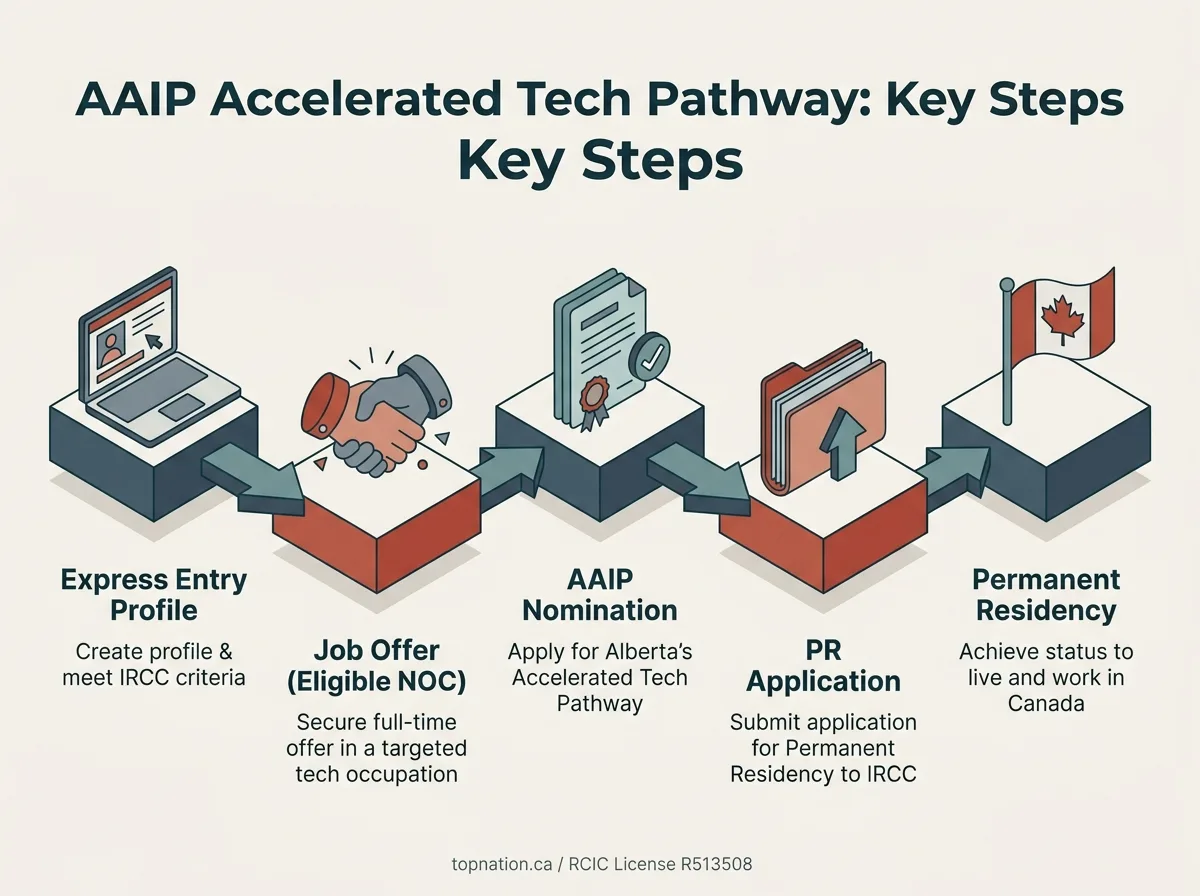
The Alberta Advantage Immigration Program (AAIP) created the Accelerated Tech Pathway to fast-track permanent residency applications for tech professionals who have a job offer from an Alberta-based tech industry employer. Unlike points-based systems, this pathway prioritizes candidates who are already contributing to, or are poised to contribute to, Alberta’s burgeoning tech sector. The program’s core strength is its processing speed, aiming to issue nominations significantly faster than many other immigration streams.
What Makes the AAIP Tech Pathway ‘Accelerated’?
The acceleration is twofold. First, applications under this stream are moved to the front of the queue for assessment by AAIP officers. Second, it requires candidates to have an active Express Entry profile. This means that once a candidate receives a provincial nomination from Alberta, they are awarded an additional 600 Comprehensive Ranking System (CRS) points, which virtually guarantees an Invitation to Apply (ITA) for permanent residency in the next federal Express Entry draw.
Key Eligibility Criteria for AAIP Tech (2026)
To qualify, applicants must meet a specific set of requirements. First, you must have an active profile in the federal Express Entry system. Second, you must be working full-time in Alberta, or have a full-time job offer, from an Alberta employer in a designated tech occupation. The employer must operate within what Alberta defines as a ‘tech industry’. Finally, your job offer must have a base wage that meets or exceeds the provincial minimum wage and any applicable wage requirements outlined in a Labour Market Impact Assessment (LMIA), if one is required.

In-Demand Tech Occupations for AAIP
Alberta maintains a specific list of eligible National Occupational Classification (NOC) codes for the Accelerated Tech Pathway. While this list is subject to change based on labour market needs, it consistently targets high-demand roles that fuel the province’s digital transformation.
Core NOCs: Software Engineers and Data Analysts
Two of the most prominent occupations on this list are NOC 21231 – Software engineers and designers and NOC 21223 – Database analysts and data administrators. These roles are foundational to the tech ecosystem, and Alberta’s focus on them reflects the high demand from companies in Edmonton and Calgary. A valid job offer in one of these NOCs from a qualifying tech company places a candidate in a very strong position for this stream.
Expanded List of Eligible Occupations
Beyond the core roles, the pathway includes a broad range of tech-related professions. This includes, but is not limited to, roles such as Information systems specialists (NOC 21222), Cybersecurity specialists (NOC 21220), Web designers and developers (NOC 21233), and Computer network technicians (NOC 22220). It’s crucial to verify your exact NOC code and ensure your job duties align with the lead statement and main duties described by ESDC Canada.
Exploring the BC PNP Tech Stream
The BC PNP Tech stream is not a standalone program but rather a prioritized pathway within British Columbia’s existing Skills Immigration streams. It provides tech employers in the province with the ability to recruit and retain international talent by offering an expedited process for their prospective employees. The system operates on a points-based invitation model, where candidates register a profile and are assigned a score based on factors like their job offer, work experience, education, and language proficiency.
How BC PNP Tech Draws Work
Unlike Alberta’s direct application approach, BC PNP Tech uses regular draws to invite candidates from the registration pool. These draws typically occur weekly and target candidates with experience in one of the 35+ eligible tech occupations. The province issues Invitations to Apply to the highest-scoring candidates, with minimum scores fluctuating based on the number of candidates in the pool and provincial processing capacity. The recent July 16 draw, for example, saw a minimum score of 122 for general tech occupations.
2026 Eligibility and Scoring System
To be eligible, a candidate must first have a full-time, indeterminate job offer from a BC employer in one of the designated tech occupations. The job offer must be for at least one year (365 days) in duration if you are applying. You then register with BC’s Skills Immigration Registration System (SIRS), where you are scored out of 200 points. Points are awarded for your offered wage, work experience directly related to the job offer, education level, and English or French language skills. Having a higher score significantly increases your chances of receiving an invitation.
Priority Tech Occupations in British Columbia
British Columbia’s list of eligible tech occupations is extensive, reflecting the maturity and diversity of its tech sector. The list is designed to address specific labour shortages and support continued growth in areas like software development, visual effects, and life sciences technology.
Comparing Eligible NOCs with Alberta
While there is significant overlap with Alberta’s list—both provinces prioritize roles like NOC 21231 (Software engineers) and NOC 21234 (Web developers)—BC’s list is broader. It includes occupations that may not be on Alberta’s list, such as technical sales specialists (NOC 62100) and authors and writers (NOC 51111) specifically for technical writing roles. This distinction is vital; if your occupation is not on Alberta’s list, BC might be your only viable tech PNP option between the two.
The Importance of the Job Offer
For both provinces, the job offer is the cornerstone of the application. However, in BC, the details of that offer—particularly the wage—directly impact your score and, therefore, your chance of being invited. A higher wage translates to more points. In Alberta, the wage must simply meet the minimum requirements; it does not grant you a competitive advantage beyond eligibility. This is a critical strategic point for high-earning tech professionals who may benefit more from BC’s points system.
AAIP vs. BCPNP: A Direct Comparison for Tech Workers 2026
Choosing between the AAIP Accelerated Tech Pathway and the BC PNP Tech stream requires a careful analysis of your personal profile against each program’s structure. The best choice is not universal; it depends entirely on your specific circumstances, including your occupation, work experience, and the nature of your job offer.
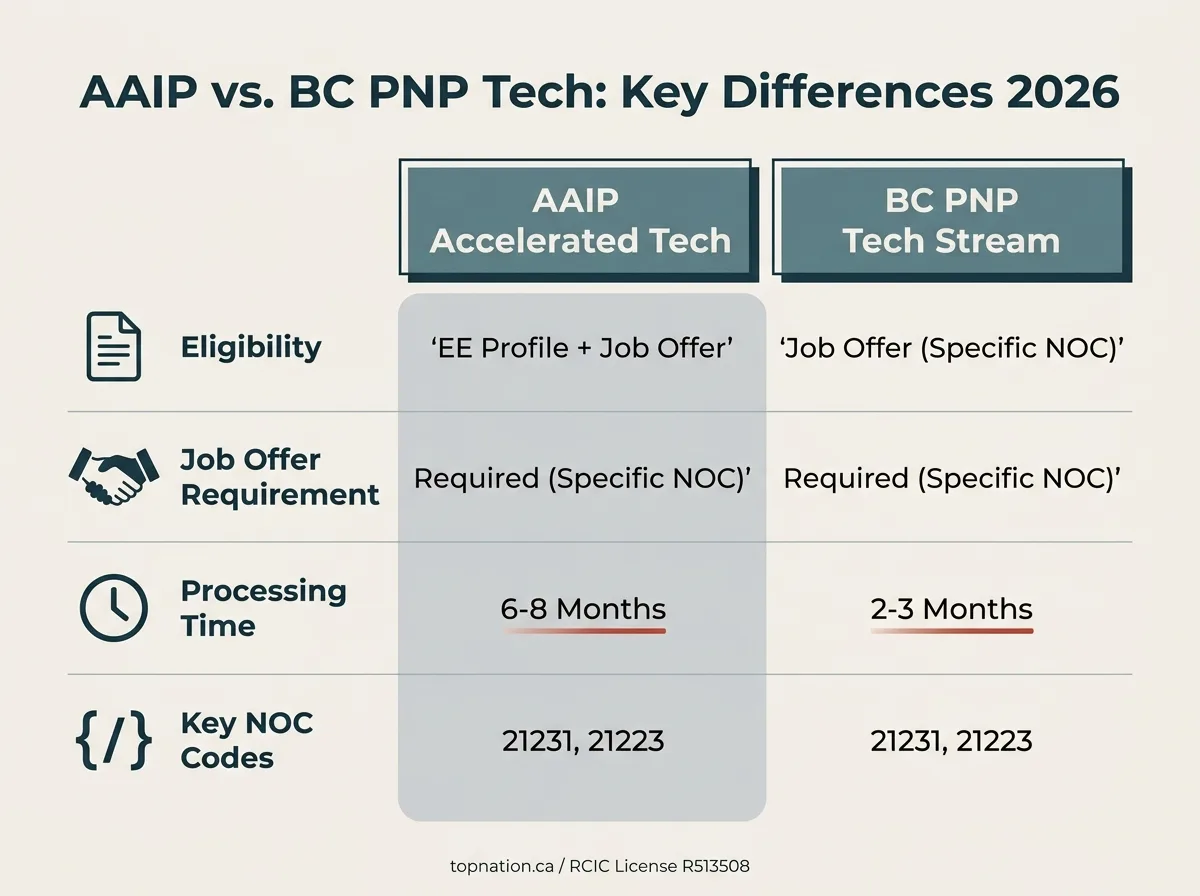
Table 1: Eligibility & Job Offer Requirements
| Factor | AAIP Accelerated Tech Pathway | BC PNP Tech Stream |
|---|---|---|
| Application System | Direct Application (if eligible) | Points-Based Invitation (SIRS) |
| Express Entry Profile | Mandatory | Not mandatory, but can be used with EEBC stream |
| Job Offer Requirement | Full-time from an Alberta tech-industry employer | Full-time (min. 1 year) from any eligible BC employer |
| Wage Impact | Must meet minimums; no extra points for higher wage | Directly impacts SIRS score; higher wage = more points |
Processing Speed & Costs: What to Expect
While eligibility is the first hurdle, the practical considerations of processing time and cost are often the deciding factors for many applicants. Here, the differences between Alberta and British Columbia become even more pronounced.
Table 2: Processing Times & Fees Comparison
| Factor | AAIP Accelerated Tech Pathway | BC PNP Tech Stream |
|---|---|---|
| Provincial Processing | Stated: ~2-4 months. TopNation Observed: 3 months for complete files. | Stated: ~2-3 months post-invitation. Invitation wait time varies. |
| Provincial Application Fee | $840 CAD | $1,475 CAD |
| Overall Certainty | High certainty if eligibility is met. Direct path to nomination. | Lower certainty; depends on SIRS score and draw cut-offs. |
Common Mistakes We See on Tech PNP Applications
Navigating these programs requires precision. At TopNation, we frequently review applications that have been returned or refused due to avoidable errors. Understanding these pitfalls can save you months of delays and potential disappointment.
Misinterpreting the ‘Tech Industry’ Definition
For Alberta’s pathway, this is the most common mistake. An applicant might secure a software developer role at a large bank or an energy company. While they are in a tech occupation, the employer is not in the ‘tech industry’ as defined by AAIP. The employer’s primary business activity must be in a qualifying NAICS code. We often see strong candidates become ineligible because their employer is ‘tech-enabled’ rather than a ‘tech company’. It’s crucial to verify the employer’s NAICS code before accepting an offer if your goal is the AAIP Tech Pathway.
Inconsistent Job Duties in the Application
Another frequent issue is a mismatch between the job duties listed in the employment reference letter and the duties outlined for the chosen NOC code. An officer must be convinced that your role as a ‘Database Analyst’ (NOC 21223) truly involves the core responsibilities of that occupation. Simply having the right job title is not enough. We advise clients to work closely with their employers to ensure reference letters are detailed, accurate, and use language that clearly aligns with the official NOC description. For assistance, you can always contact a licensed RCIC.
Making Your Choice: Alberta or British Columbia?
Your final decision should be based on a strategic assessment of your strengths and priorities. There is no single ‘best’ program, only the program that is best for you.
When to Choose Alberta (AAIP)
Alberta is the ideal choice if you value speed and certainty. If you have a qualifying job offer from a verified tech-sector company in an eligible NOC and a valid Express Entry profile, the path to nomination is direct and fast. You are not competing against other candidates based on a points score. If you meet the criteria, you can apply. This makes it an excellent option for candidates who want to minimize uncertainty in their immigration journey. As a leading immigration consultant in Edmonton, we have seen this pathway provide exceptional results for our clients.
When British Columbia (BC PNP) is a Better Fit
British Columbia is a better fit if you have a high-paying job offer, extensive work experience, and high language scores. These factors will give you a competitive SIRS score, increasing your chances of being invited. Furthermore, if your tech occupation is not on Alberta’s specialized list or your employer is not in a ‘core tech’ industry, BC PNP offers more flexibility. The province’s broader definition of an eligible employer can be a significant advantage for those working in tech roles within other sectors.
Alberta or BC? Get a Data-Driven Pathway Assessment.
Our licensed RCICs will analyze your profile against both the AAIP and BCPNP tech streams.
| Call 587-400-0077 | Book a Consultation → |
RCIC Licensed | Serving All of Alberta
Last updated: July 2026. This guide compares the AAIP and BCPNP tech streams based on publicly available information and our firm’s experience. Immigration rules change frequently — consult a licensed RCIC (CICC #R513508) for advice specific to your situation.