MAJOR POLICY EXTENSION ANNOUNCED
On July 6, 2024, Immigration, Refugees and Citizenship Canada (IRCC) officially extended the Francophone Minority Communities Student Pilot. This crucial pathway offers a direct route to permanent residence for French-speaking international students who complete their studies outside of Quebec, reinforcing Canada’s commitment to its Francophone immigration targets.
FRANCOPHONE PR PATHWAY — JULY 2024 UPDATE
For Francophone international students dreaming of building a life in Canada, the path to permanent residence just became clearer and more secure. The recent extension of the Francophone Minority Communities Student Pilot (FMCSP) is a game-changing development, specifically designed for those who have chosen to study in one of Canada’s nine provinces or three territories outside of Quebec. This guide provides a comprehensive breakdown of the extended pilot, detailing the eligibility criteria, application process, and strategic advantages for French-speaking graduates. We will explore exactly what this IRCC announcement means for your future and how you can leverage your language skills to secure permanent residence in thriving communities across Canada, including Alberta.

Understanding the Francophone Minority Communities Student Pilot (FMCSP)
The FMCSP is not just another immigration program; it’s a strategic initiative by the Canadian government. Its primary goal is to address the demographic decline of French-speaking communities outside of Quebec and to enrich the nation’s cultural and linguistic diversity. By creating a dedicated pathway for French-speaking international graduates, Canada aims to attract and retain individuals who will actively participate in and strengthen these vital communities.
The Mandate: Strengthening Canada’s Francophone Fabric
Canada has set ambitious targets for Francophone immigration, aiming for French-speaking newcomers to make up a significant percentage of all immigrants settling outside Quebec. The FMCSP is a key tool in achieving this goal. It recognizes that international students are ideal candidates for permanent residence: they are educated in Canadian institutions, have established connections, and possess the language skills to integrate seamlessly. This pilot fast-tracks their transition from temporary residents to permanent members of Canadian society.
How it Differs from Express Entry
While Express Entry is the main pathway for economic immigrants, it is a competitive system based on a points grid (the Comprehensive Ranking System or CRS). The FMCSP, by contrast, is a direct application pilot. If you meet the specific, non-negotiable eligibility criteria, you can apply directly for permanent residence. It does not use a CRS score, removing the uncertainty of waiting for an Invitation to Apply (ITA) based on fluctuating score cut-offs. This makes it a more predictable and accessible route for qualifying Francophone graduates.
Key Changes in the July 2024 Extension
The July 6th announcement was more than a simple renewal; it provided long-term stability and clarity for current and prospective students. Understanding these changes is crucial for planning your academic and immigration journey effectively.
Pilot Extended to 2026: Certainty for Your Future
The most significant change is the extension of the pilot program until at least 2026. This provides a clear runway for students who are just beginning their studies or are in the middle of a multi-year program. You can now confidently pursue a qualifying Canadian education knowing that this dedicated PR pathway will likely be available upon your graduation, provided you meet the requirements at the time of your application.
Updated Intake Caps and Application Windows
While IRCC has not announced specific annual intake caps with this extension, the program operates under managed intake. This means applications are typically accepted during specific windows until a target number is reached. It is imperative to prepare your application in advance so you can submit it as soon as an intake window opens. Based on our experience with previous pilot programs, these windows can close quickly once the quota is met.
IRCC’s Renewed Focus on Francophone Immigration
This extension signals IRCC’s unwavering commitment to its Francophone Immigration Strategy. For applicants, this means your profile is highly valued. It aligns perfectly with federal priorities, which can often translate into more streamlined processing. At TopNation, our internal data on Francophone files shows a consistent trend of focused and efficient processing by IRCC for applicants who clearly meet the mandate of these targeted programs.
Are You Eligible? A Detailed FMCSP Checklist
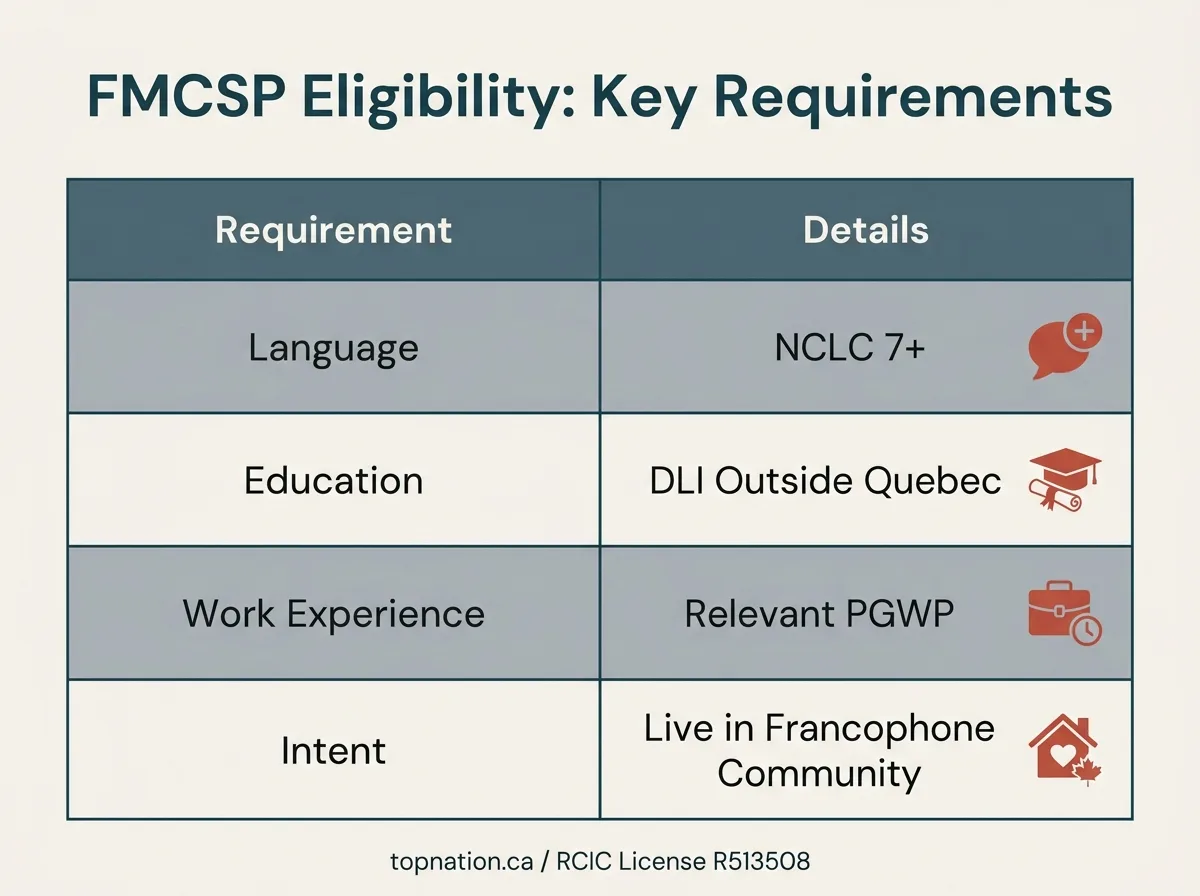
Eligibility for the FMCSP is strict and requires meeting specific criteria related to your education, language skills, and future intentions. Before proceeding, you must be able to answer “yes” to all the following points.
Educational Credentials: The DLI Requirement
Your studies must have been completed at a Designated Learning Institution (DLI) located outside of Quebec. A DLI is a school approved by a provincial or territorial government to host international students. You must have graduated from a program that was at least two years in length and resulted in a degree, diploma, or certificate.
Language Proficiency: The NCLC 5 Minimum
You must demonstrate proficiency in French at a minimum level of 5 on the Niveaux de compétence linguistique canadiens (NCLC) across all four abilities: speaking, listening, reading, and writing. This must be proven with results from an approved language test (TEF Canada or TCF Canada) taken within the last two years.
Intention to Reside Outside Quebec
A crucial component of your application is demonstrating a genuine intention to live and work in a province or territory other than Quebec. This can be shown through factors like your province of study, job offers, family ties, or a detailed settlement plan for a specific community, such as the vibrant Francophone communities in Edmonton or Calgary.
Deep Dive: NCLC 5 Language Requirements
The language requirement is the cornerstone of the FMCSP. A misunderstanding here can lead to an application being refused. It is not enough to be a native French speaker; you must prove your ability through a standardized, approved test.
Approved Language Tests: TEF Canada vs. TCF Canada
Only two tests are accepted for this pilot: the Test d’évaluation de français (TEF) Canada and the Test de connaissance du français (TCF) Canada. Note the “Canada” designation—general versions of these tests are not valid for immigration purposes. You must schedule and take the specific version designed for Canadian immigration.
A common and costly mistake we see is applicants submitting results from an academic or general test. IRCC is inflexible on this point; the wrong test version will result in an automatic application refusal, forcing you to start the entire process over again after securing the correct test results.
Achieving NCLC 5: Minimum Scores Required
To meet the NCLC 5 requirement, you need to achieve a specific minimum score on each of the four sections of your chosen test. The required scores are not interchangeable. The table below outlines the minimum you must achieve on each component.
| Language Ability | Minimum TEF Canada Score | Minimum TCF Canada Score |
|---|---|---|
| Reading (Compréhension de l’écrit) | 151-180 | 375-405 |
| Writing (Expression écrite) | 226-270 | 6-6 |
| Listening (Compréhension de l’oral) | 181-216 | 369-397 |
| Speaking (Expression orale) | 226-270 | 6-6 |
Your Educational Journey: Qualifying Programs & Institutions
Your Canadian education is the foundation of your eligibility. IRCC has specific rules about the type and length of the program you must complete.
Minimum Program Length: The 2-Year Rule
Your program of study must have been at least two years (or 16 months of full-time study) in duration. This typically corresponds to a diploma, an associate degree, a bachelor’s degree, or a post-graduate certificate that requires a previous credential. Two separate one-year programs can sometimes be combined to meet this requirement, but this should be confirmed with a licensed consultant before you apply. For expert guidance, you can always contact a licensed RCIC on our team.
The Importance of Maintaining Full-Time Status
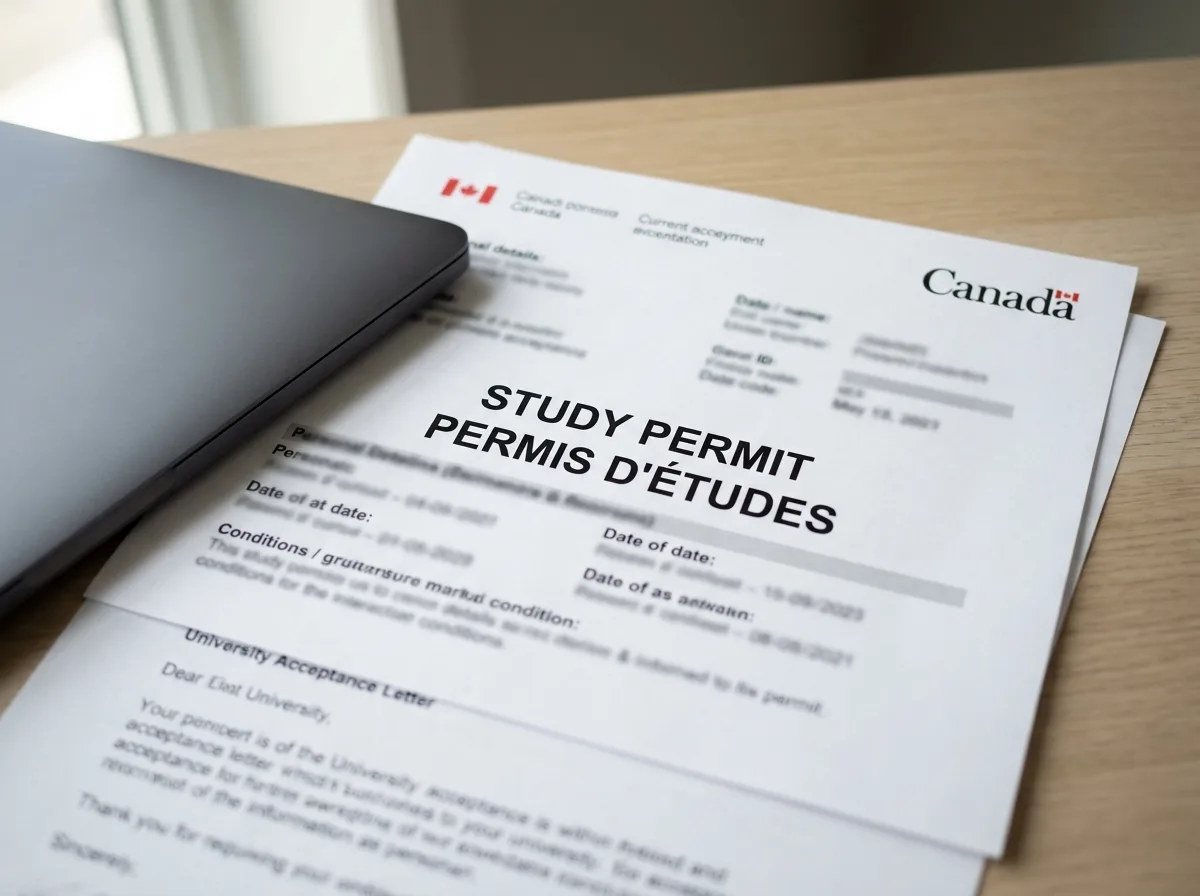
Throughout your qualifying program, you must have maintained your status as a full-time student. Unauthorized breaks or dropping to part-time status (except in your final semester) can render you ineligible for this pilot and for a Post-Graduation Work Permit (PGWP). It is critical to maintain your study permit conditions meticulously.
The Application Process: From Student to Permanent Resident
The FMCSP application is submitted directly to IRCC through the online permanent residence portal. The process is detailed and requires careful preparation of numerous documents.

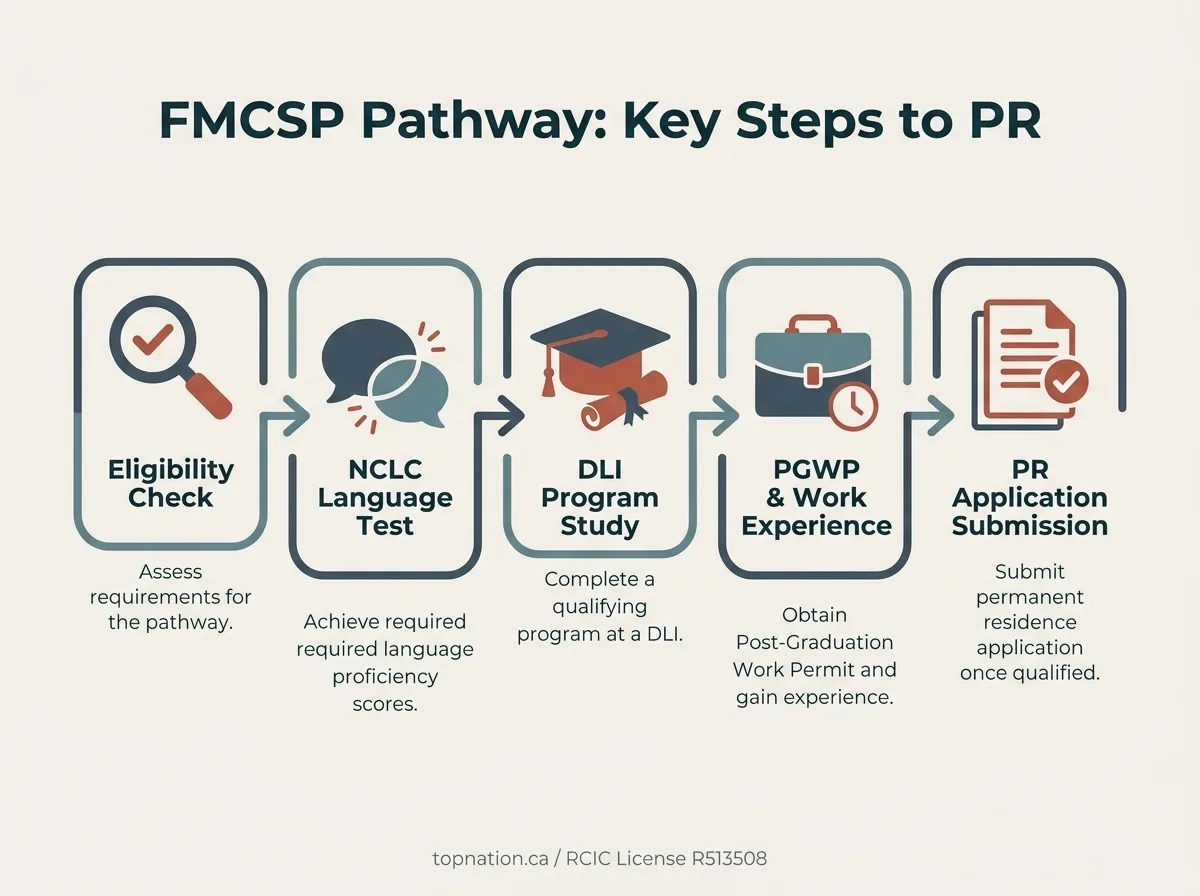
Step 1: Document Checklist and Preparation
Before an application window opens, you should have all your documents scanned and ready for upload. A complete application is key to smooth processing. Based on our successful FMCSP files, a typical document package includes: your valid language test results (TEF/TCF Canada), your diploma/degree and final transcripts from your DLI, a confirmation of graduation letter, a copy of your passport, your study permit, and any work permits (like a PGWP). You will also need police certificates from every country you have lived in for 6 months or more since age 18, and a settlement plan outlining your intention to reside outside Quebec.
Step 2: Submitting Your Application and Paying Fees
Once the portal is open for intake, you will complete the digital application forms (Generic Application Form for Canada, Schedule A, etc.) and upload your supporting documents. You will then pay the required government fees, which include the right of permanent residence fee and biometrics fee. After submission, you will receive an Acknowledgment of Receipt (AOR).
Step 3: Processing and Final Decision
An IRCC officer will review your application for completeness and eligibility. They will verify your documents, assess your admissibility, and may request additional information or an interview. Based on TopNation’s internal file data from 2023-2024, well-prepared FMCSP applications submitted from Alberta have seen average processing times of 8-10 months from AOR to final decision. This is notably faster than many other economic immigration streams, highlighting the priority placed on this cohort.
Why Alberta? The Francophone Advantage in Western Canada
While you can settle in any province or territory outside Quebec, Alberta presents a compelling case for Francophone newcomers. The province combines a booming economy with a growing and well-supported French-speaking community.
Thriving Francophone Communities and Services
Cities like Edmonton and Calgary, as well as communities like Beaumont and St. Albert, have dynamic Francophone populations. There are French-language schools, community centres (like La Cité Francophone in Edmonton), and cultural events that make integration easier and more enjoyable. This established infrastructure provides a strong support network for new permanent residents.
Economic Opportunities and High Demand Sectors
Alberta’s economy is diversifying beyond oil and gas into technology, healthcare, logistics, and skilled trades. Bilingual professionals are in high demand across these sectors. Your ability to work in both of Canada’s official languages is a significant competitive advantage in the Albertan job market. For personalized advice on leveraging your skills in the local market, our Edmonton immigration consultant team can provide tailored guidance.
Frequently Asked Questions about the FMCSP
Navigating a new pilot program can raise many questions. Here are answers to some of the most common queries we receive from clients.
Can I apply if some of my studies were completed online?
Yes, under current IRCC policy, distance learning completed from within Canada can count towards your eligibility. However, studies completed online from outside Canada do not count. The rules around this changed during the pandemic and are subject to revision, so it’s vital to confirm the policy in place at the time of your application.
What if I studied in Quebec but want to live in Alberta after graduation?
Unfortunately, you would not be eligible for this specific pilot. The FMCSP requires that your qualifying education be completed at a DLI *outside* of Quebec. If you studied in Quebec, you would need to explore other federal programs like Express Entry or Quebec’s own immigration streams.
Does this pilot lead to a nomination or direct permanent residence?
This is a federal pilot that leads directly to permanent residence. It is not a Provincial Nominee Program (PNP), so you do not need a nomination from a province like Alberta to apply. You apply directly to the federal government (IRCC).
How does the FMCSP compare to the Alberta Advantage Immigration Program (AAIP)?
The AAIP has several streams, most of which require a job offer in Alberta and/or specific work experience. The FMCSP’s primary requirements are your French language skills and your Canadian education outside Quebec. It does not have a mandatory work experience or job offer component, making it more accessible for recent graduates who may not have secured skilled employment immediately after their studies.
Your French Language Skills Are Your Key to Canada. Let’s Unlock the Door.
This extended pilot is a limited-time opportunity. Ensure your application is perfect.
| Call 587-400-0077 | Plan Your PR Pathway → |
RCIC Licensed | Serving All of Alberta
Last updated: July 2024. This guide reflects the FMCSP extension announced on July 6, 2024. Immigration rules change frequently — consult a licensed RCIC for advice specific to your situation.